
1. When Symptoms Should Be Evaluated
Leg pain, swelling, heaviness, visible veins or night cramps may indicate venous circulation problems. A structured evaluation helps clarify whether symptoms are cosmetic, functional or related to chronic venous insufficiency.
2. Diagnosis and Treatment Planning
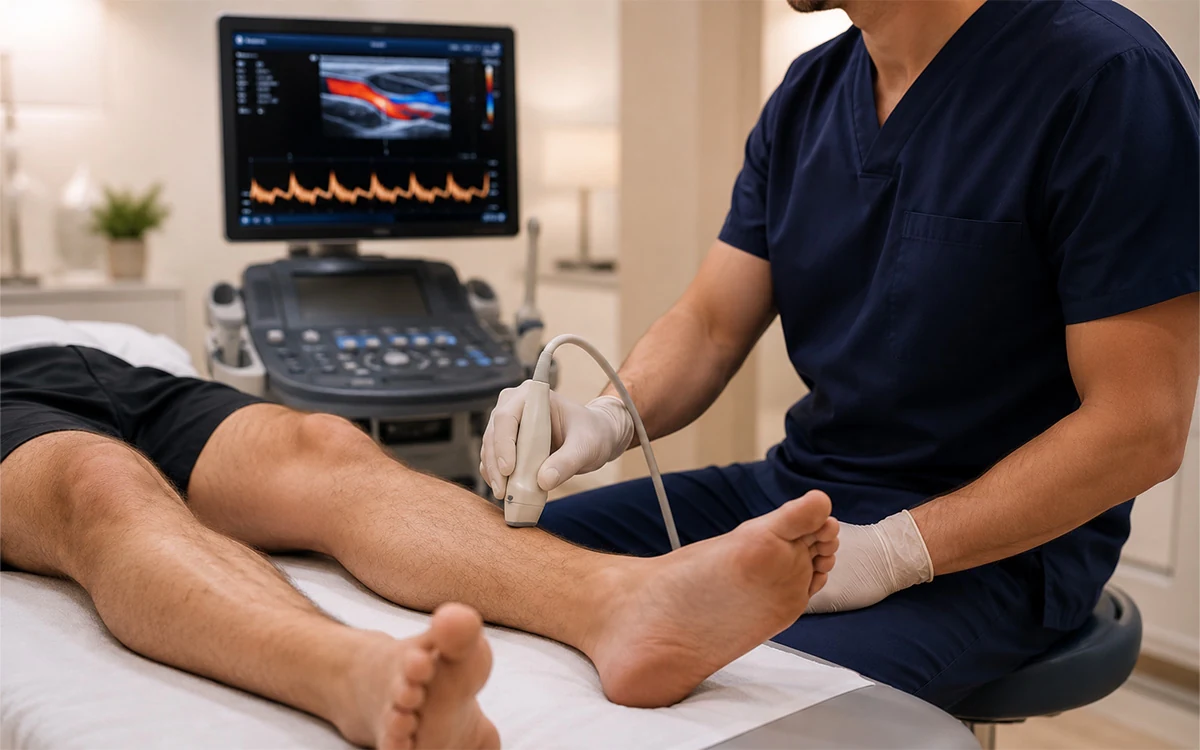
Treatment begins with patient history, physical examination and imaging when needed. Doppler ultrasound mapping helps clarify reflux patterns before choosing a method.
- Varicose vein and spider vein evaluation
- Assessment of swelling and venous reflux
- Personalized planning according to symptoms and risk profile
3. Modern Venous Techniques
Endovenous radiofrequency ablation may be considered in selected patients when the clinical findings and ultrasound mapping support this approach. The aim is precise treatment planning with careful patient education and follow-up.
- Doppler-guided planning
- Endovenous radiofrequency ablation when appropriate
- Clear recovery guidance and scheduled follow-up
4. Follow-Up and Long-Term Care
Venous care does not end with a procedure. Follow-up, patient education and lifestyle guidance help protect comfort and reduce recurrence risk.