Peripheral Arterial Disease (PAD) is a chronic, progressive circulatory condition characterized by the narrowing or occlusion of the arteries that supply oxygenated blood to the lower extremities. Unlike venous disease, which involves issues with blood returning to the heart, arterial disease is a problem of "supply." When the demand for oxygenated blood in the muscles exceeds the available supply due to arterial blockages, tissue ischemia occurs. The management of this condition requires a multidisciplinary scientific approach ranging from aggressive pharmacological stabilization to complex surgical revascularization.
1. The Pathophysiology of Arterial Occlusion
The primary driver of arterial disease is atherosclerosis—a systemic inflammatory process. It begins with endothelial dysfunction, often triggered by smoking, hypertension, or hyperglycemia (diabetes). This dysfunction allows low-density lipoprotein (LDL) cholesterol to penetrate the arterial wall, where it undergoes oxidation and triggers an immune response. Macrophages consume these lipids, turning into "foam cells" that form the core of an atherosclerotic plaque.
Over time, these plaques calcify and grow, narrowing the arterial lumen (stenosis) or causing a complete blockage (occlusion). Scientifically, this reduces the "perfusion pressure" in the distal limbs. In the early stages, the body may compensate by developing collateral circulation—smaller side vessels that bypass the blockage—but as the disease progresses, these secondary pathways become insufficient, leading to symptomatic ischemia.
2. Indications for Treatment: Who and Why?
Not every patient with arterial narrowing requires an invasive procedure. Treatment is strictly dictated by the severity of ischemia, often categorized using the Rutherford or Fontaine scales.
- Intermittent Claudication: These patients experience muscle pain or cramping during physical activity that subsides with rest. Intervention is considered if the pain significantly limits daily function or employment, as the metabolic demand of the walking muscle cannot be met by the narrowed artery.
- Critical Limb Ischemia (CLI): This is the most severe stage. Patients suffer from "rest pain" (pain even when sitting or lying down) or have non-healing ischemic ulcers and gangrene. These individuals require urgent treatment to prevent limb loss (amputation).
- Acute Limb Ischemia: A sudden blockage, often due to a dislodged blood clot (embolism), requires immediate intervention to restore flow within hours and prevent permanent nerve and muscle death.
The fundamental objective of treatment is to restore the "Ankle-Brachial Index" (ABI)—the ratio of blood pressure at the ankle to that in the arm—to a physiological range, thereby ensuring adequate oxygen delivery for cellular metabolism and tissue repair.
3. Therapeutic Modalities: Scientific Approaches to Revascularization
The treatment of arterial disease follows a "step-up" approach, starting with medical management and progressing to endovascular or surgical interventions.
Pharmacological and Conservative Management
Before any procedure, the systemic nature of atherosclerosis must be addressed. This includes the use of antiplatelet agents (Aspirin or Clopidogrel) to prevent clot formation on existing plaques, and high-intensity statins to stabilize plaques and prevent them from rupturing. A unique scientific intervention is "Supervised Exercise Therapy" (SET), which utilizes the body’s own physiological adaptation to induce angiogenesis—the growth of new micro-vessels—through controlled ischemic stress.
Endovascular Interventions (Minimally Invasive)
Endovascular techniques are performed through a small puncture, usually in the femoral artery.
- Balloon Angioplasty: A catheter with a deflated balloon is navigated to the site of the blockage. Upon inflation, the balloon mechanically compresses the plaque against the arterial wall, widening the lumen.
- Stenting: To prevent the artery from "recoiling" or collapsing after angioplasty, a metal mesh tube (stent) is deployed as a permanent scaffold. Modern stents are often "Drug-Eluting" (DES), coated with pharmacological agents like paclitaxel to inhibit the growth of scar tissue (intimal hyperplasia) inside the stent.
- Atherectomy: In cases of heavily calcified plaques, mechanical devices are used to "shave" or "drill" away the plaque material, physically removing the obstruction from the vessel.
Surgical Revascularization
When the blockages are too long or too calcified for endovascular methods, open surgery is required.
- Bypass Grafting: The surgeon creates a detour around the blocked segment. The "gold standard" is using the patient’s own vein (autologous graft), typically the great saphenous vein. If a natural vein is unavailable, synthetic grafts made of PTFE or Dacron are used.
- Endarterectomy: This involves opening the artery directly and physically "peeling" the plaque buildup out of the inner lining. This is most commonly performed on the common femoral artery in the groin.
4. The Recovery Process and Post-Procedural Physiology
The recovery phase is a critical window where the body must adapt to the sudden increase in blood flow, a phenomenon known as "reperfusion."
Immediate Post-Op Monitoring
Following revascularization, the primary focus is monitoring the "distal pulses" and the "Capillary Refill Time" (CRT). A successful procedure results in a warmer limb and improved skin color. However, clinicians must watch for "Reperfusion Injury," where the sudden influx of oxygen to previously starved tissues can cause localized swelling or, in rare cases, systemic metabolic issues.
Wound Healing and Tissue Integrity
For patients with pre-existing ischemic ulcers, the recovery of the skin is slow. Even with restored blood flow, the microcirculation may take weeks to normalize. During this time, specialized wound care is necessary to manage the transition from necrotic tissue to healthy granulation tissue.
Long-Term Biological Maintenance
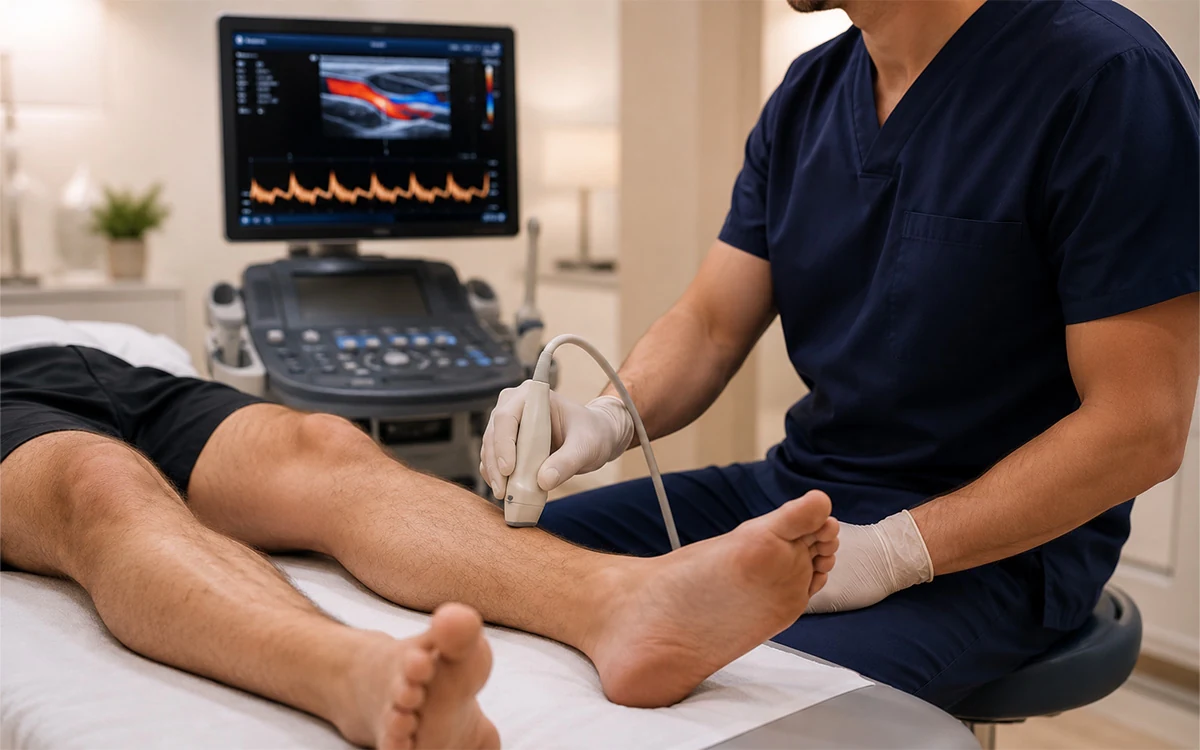
The body views stents and grafts as foreign objects. Consequently, the endothelial cells (the inner lining of blood vessels) begin a process called "endothelialization," where they grow over the stent or graft. To prevent this process from becoming excessive and causing a new blockage (restenosis), patients must remain on strict antiplatelet therapy. Regular monitoring via Duplex Ultrasound is essential to ensure the "patency" (openness) of the treated segment.
5. Risk Factors and Prevention of Recurrence
Arterial disease is a systemic condition, meaning that a successful leg procedure does not "cure" the underlying atherosclerosis. The scientific management of recovery must include rigorous control of hemoglobin A1c (for diabetics) and blood pressure. Smoking cessation is the single most important factor in post-operative success; the chemicals in tobacco smoke cause immediate vasoconstriction and accelerate the failure of grafts and stents.
The healing process also involves the lymphatic system, which must work to clear the edema (swelling) that often occurs after blood flow is restored. Patients are encouraged to elevate their limbs and, once the incisions have healed, resume walking to maintain the mechanical efficiency of the circulatory system. This holistic approach ensures that the mechanical fix of a bypass or stent is supported by a biological environment conducive to long-term vascular health.