Lipoedema is a chronic, progressive medical condition characterized by a pathological and symmetrical accumulation of adipose tissue (fat cells), primarily in the lower extremities and sometimes the arms. Unlike lifestyle-induced obesity, lipoedema is a loose connective tissue disorder that is largely resistant to caloric restriction and physical exercise. The condition predominantly affects women and is often triggered or exacerbated by hormonal shifts such as puberty, pregnancy, or menopause. Scientifically, the management of lipoedema focuses on reducing interstitial pressure, alleviating chronic pain, and preventing the progression toward secondary lymphedema.
1. The Pathophysiology of Lipoedema
The fundamental biological mechanism of lipoedema involves both adipocyte hypertrophy (increase in cell size) and hyperplasia (increase in cell number), coupled with microvascular abnormalities. The affected adipose tissue is not merely "storage fat"; it is a metabolically and structurally altered tissue. In lipoedema, the capillaries become "leaky" (microangiopathy), leading to an excess of fluid in the interstitial space. This chronic fluid overload puts significant strain on the lymphatic system.
As the disease progresses, the adipose tissue undergoes fibrotic changes. The fat becomes nodular and "grainy" to the touch. This structural change compresses the surrounding nerves and nociceptors, leading to "lipodynia"—the characteristic pain and hypersensitivity to touch associated with the condition. Furthermore, the increased limb volume causes orthopedic stress, particularly on the medial aspect of the knees, leading to gait abnormalities and secondary joint degeneration.
2. Indications for Treatment: Who and Why?
Clinical intervention is indicated for individuals who meet the diagnostic criteria for Lipoedema (Stages 1 through 3) and experience functional impairment. The "why" of treatment is rooted in both symptomatic relief and the prevention of long-term disability.
- Pain Management: Patients with lipoedema often suffer from a heavy, bursting sensation and spontaneous pain that is not present in standard obesity.
- Capillary Fragility: Frequent, unexplained bruising is a hallmark of the microvascular fragility in lipoedema tissue, requiring intervention to stabilize the vascular walls.
- Prevention of Lipo-lymphedema: If the volume of pathological fat is not managed, the lymphatic vessels eventually become exhausted and damaged (lymphangiopathy). This leads to a dual condition where the patient develops "pitting" edema on top of the lipoedema.
- Mobility Preservation: In Stage 3, large lobules of fat can physically obstruct walking, leading to skin maceration (chafing) and severe orthopedic misalignment of the hips and ankles.
3. Conservative Therapeutic Approaches
Conservative management is the first line of defense. While it does not remove the pathological fat cells, it addresses the "fluid component" and inflammatory state of the tissue.
Complex Decongestive Therapy (CDT)
Similar to lymphedema treatment, CDT for lipoedema involves Manual Lymphatic Drainage (MLD). MLD helps to move the protein-rich fluid out of the interstitial spaces and reduces the inflammatory cytokines present in the stagnant fluid.
Compression Therapy
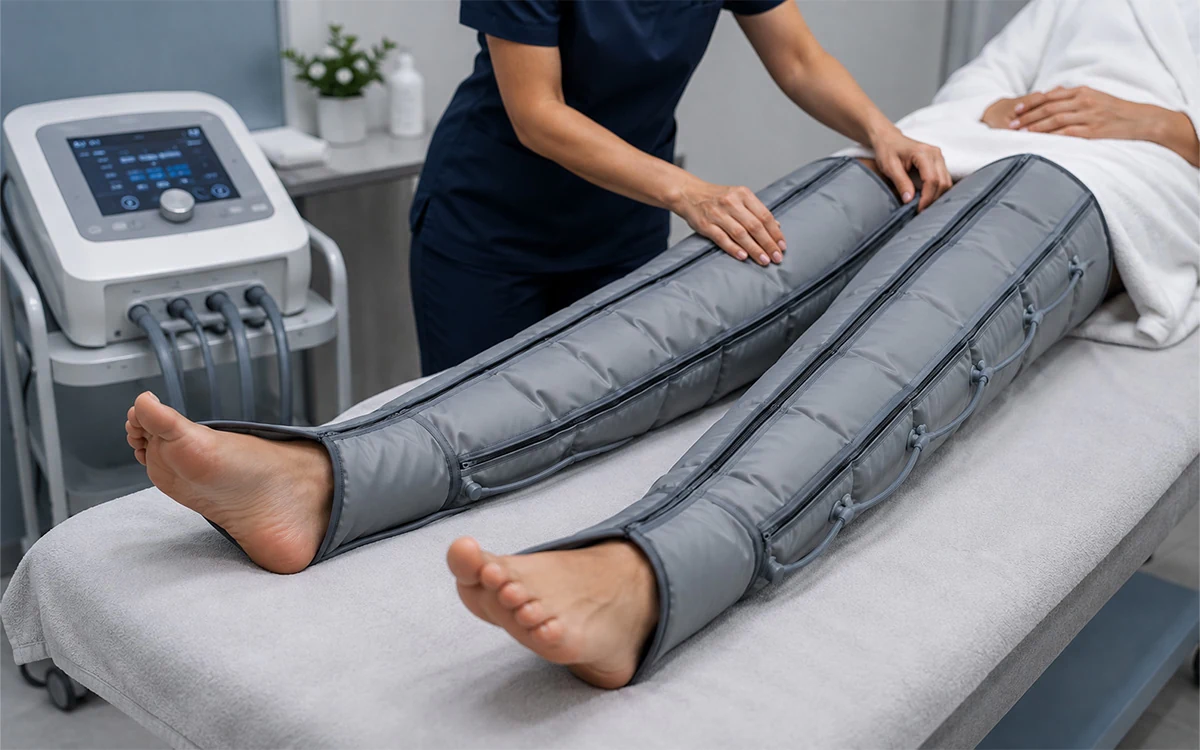
The use of flat-knit (rather than circular-knit) compression garments is essential. Flat-knit fabric provides a stiff, bridge-like pressure that does not "cut" into the skin folds. The pressure facilitates microcirculation and provides a mechanical scaffold for the loose connective tissue, which significantly reduces the daily pain levels.
Anti-Inflammatory Nutrition
Evidence suggests that lipoedema is an inflammatory condition. Scientific nutritional approaches, such as the RAD (Rare Adipose Tissue) diet or ketogenic protocols, focus on reducing insulin spikes and systemic inflammation, which can help stabilize the size of the adipocytes and reduce fluid retention.
4. Surgical Intervention: Specialized Liposuction
When conservative measures fail to provide symptomatic relief or prevent progression, specialized surgical intervention is performed. This is not "cosmetic" liposuction; it is a functional, lymph-sparing surgery designed to debulk the pathological tissue.
Tumescent Local Anesthesia (TLA) and Water-Jet Assisted Liposuction (WAL)
Standard liposuction techniques can be hazardous for lipoedema patients because they risk damaging the already compromised lymphatic vessels. Modern scientific standards favor Water-Jet Assisted Liposuction (WAL) or Power-Assisted Liposuction (PAL) using the tumescent technique.
In WAL, a fan-shaped water spray is used to gently detach the fat cells from the connective tissue, nerves, and lymphatic channels before they are aspirated. This minimizes mechanical trauma. The surgeon uses a "longitudinal" technique, moving the cannulas parallel to the lymphatic vessels rather than across them. The goal is to remove as much of the diseased adipose tissue as possible to reduce the metabolic and mechanical load on the limb.
5. The Post-Operative Recovery and Biological Remodeling
The recovery process following lipoedema surgery is extensive and requires high levels of patient compliance to ensure the tissue heals without complications.
Immediate Post-Operative Phase (Days 1–14)
Following surgery, there is significant "tumescent drainage." The body enters an acute inflammatory phase. Patients must begin walking almost immediately to prevent deep vein thrombosis (DVT) and to facilitate the drainage of inflammatory fluids through the entry points.
Tissue Remodeling and Fibrosis Prevention
The "empty" space left by the removed fat must be managed to prevent it from filling with seroma (fluid) or developing excessive scar tissue. This is achieved through 24/7 compression for the first 4 to 6 weeks. MLD is often started within 48 hours of surgery to "guide" the lymphatic system as it adapts to the new tissue landscape.
Long-Term Physiological Adaptation
It takes 6 to 12 months for the "final" result of lipoedema surgery to manifest. During this time, the skin—which was often overstretched—must undergo "retraction." The reduction in limb volume usually leads to a dramatic decrease in the "bursting" pain and an improvement in the patient’s gait. However, because lipoedema is a systemic connective tissue disorder, surgery does not "cure" the underlying genetic predisposition. Recovery involves a transition back to maintenance compression and anti-inflammatory lifestyle habits to ensure that the remaining adipocytes do not undergo hypertrophy.
The management of lipoedema is a multidisciplinary effort. By combining the mechanical removal of pathological tissue with the physiological support of compression and lymphatic care, clinicians can stop the progression of this debilitating disease and restore the functional integrity of the peripheral vascular and lymphatic systems.