Lymphedema is a chronic and progressive condition characterized by the accumulation of protein-rich interstitial fluid due to a structural or functional insufficiency of the lymphatic system. Unlike the circulatory system, which is a closed loop driven by the heart, the lymphatic system is a one-way drainage network responsible for fluid homeostasis, lipid transport, and immune surveillance. When this system fails, it leads to tissue swelling, chronic inflammation, and eventually, irreversible fibrotic changes. The management of lymphedema is not a "cure" but a lifelong physiological intervention designed to reduce limb volume, restore function, and prevent life-threatening infections.
1. The Pathophysiology of Lymphatic Failure
To understand treatment, one must first recognize the "lymphatic load." Every day, the vascular capillaries filter fluid into the interstitial space. The lymphatic system must collect this fluid—now called lymph—and return it to the venous circulation. Lymphedema occurs when the "lymphatic transport capacity" falls below the "lymphatic load."
This failure is not merely an accumulation of water. The stagnant fluid is rich in high-molecular-weight proteins. These proteins exert a high colloid osmotic pressure, which draws even more water into the tissue. Furthermore, this protein-rich environment triggers a chronic inflammatory response. Macrophages become overworked, and fibroblasts are activated, leading to the deposition of collagen and the development of "fibrosis" (tissue hardening). In advanced stages, the chronic inflammation also stimulates adipogenesis, causing the abnormal accumulation of fatty tissue in the affected limb.
2. Indications: Who Requires Treatment and Why?
Lymphedema is broadly categorized into two types, both requiring specialized intervention:
- Primary Lymphedema: Resulting from congenital malformations of the lymphatic system (hypoplasia or hyperplasia of vessels). It may be present at birth or develop during puberty (Lymphedema Praecox) or later in life.
- Secondary Lymphedema: The most common form, typically occurring after surgical lymph node removal (lymphadenectomy) or radiation therapy for cancers (breast, pelvic, or melanoma). It can also be caused by trauma, chronic venous insufficiency, or parasitic infections like filariasis.
Scientific intervention is critical because untreated lymphedema follows a predictable, worsening trajectory (Stages 0 through 3). Treatment is required to prevent cellulitis—a severe bacterial skin infection—as the stagnant lymph acts as a culture medium for bacteria. Additionally, intervention is necessary to prevent the loss of limb mobility and the rare but fatal complication of lymphangiosarcoma (Stewart-Treves syndrome).
3. The Gold Standard: Complex Decongestive Therapy (CDT)
The scientific community recognizes Complex Decongestive Therapy (CDT) as the primary non-invasive treatment. It is divided into two phases: the "Reductive Phase" (Phase I) and the "Maintenance Phase" (Phase II).
Manual Lymph Drainage (MLD)
MLD is a specialized massage technique that uses light, rhythmic skin-stretching to stimulate the contraction of the "lymphangions" (the functional units of lymph vessels). The therapist first clears the proximal areas (the trunk and neck) to create "space" and then directs the fluid from the congested distal areas toward functional lymph nodes. This utilizes the body’s superficial lymphatic pathways to bypass the blocked or damaged regions.
Compression Therapy
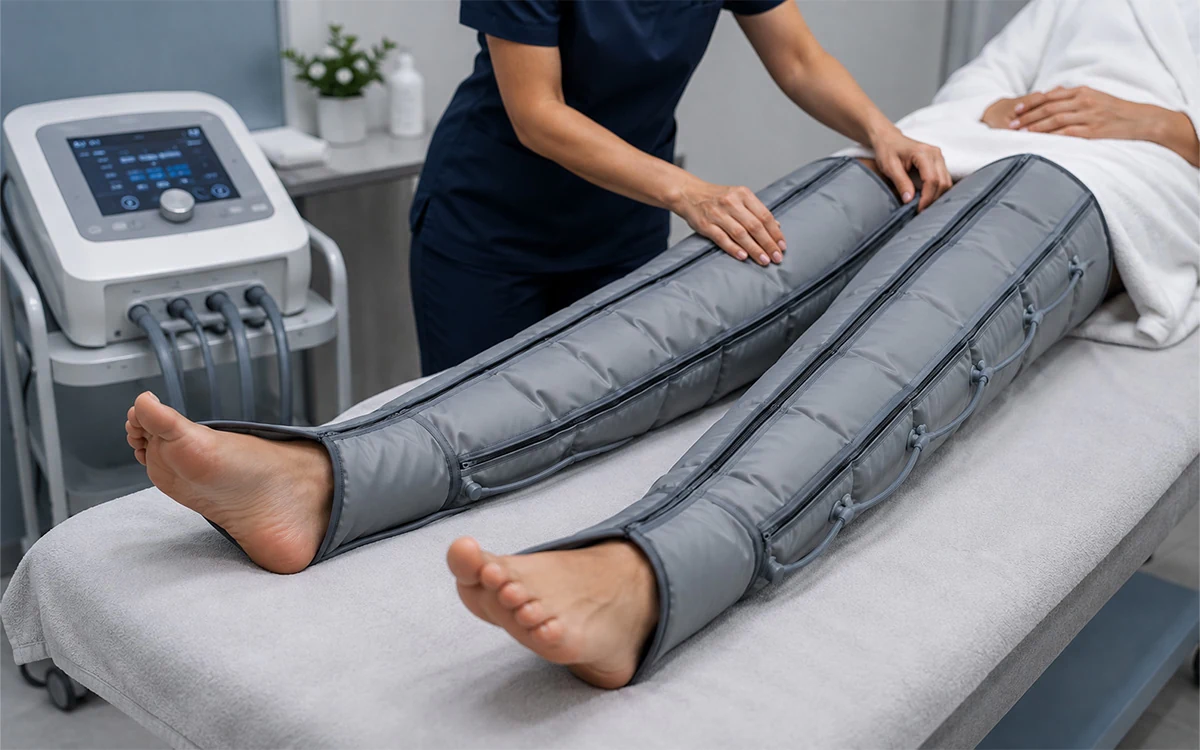
During the reductive phase, "short-stretch" multi-layered bandages are used. Unlike the long-stretch bandages used for sports injuries, short-stretch bandages have a "high working pressure" (they provide resistance when the muscle contracts) and a "low resting pressure." This mechanism facilitates the muscle pump, effectively squeezing the lymph out of the interstitial spaces during movement. In Phase II, these are replaced by custom-fitted compression garments to maintain the volume reduction.
Decongestive Exercises
These are specific low-impact movements performed while wearing compression. The combination of muscle contraction and external resistance from the bandages significantly increases lymphatic resorption and transport.
Skin and Nail Care
Because the immune response is compromised in the lymphedematous limb, even a small scratch can lead to systemic infection. Scientific management involves maintaining an acidic skin pH to inhibit bacterial growth and aggressive moisturizing to prevent skin fissures.
4. Surgical Interventions: Physiological and Cytoreductive Approaches
When conservative management is insufficient, surgical options may be considered. These are categorized based on their scientific objective.
Physiological Procedures
- Lymphaticovenular Anastomosis (LVA): Using super-microsurgery, surgeons connect obstructed lymphatic vessels directly to small adjacent veins. This creates a "shunt" that allows lymph to bypass the blockage and enter the venous system directly.
- Vascularized Lymph Node Transfer (VLNT): Healthy lymph nodes are harvested from a donor site (like the abdomen or neck) and transplanted into the damaged area. These nodes act as a "biological pump" and produce growth factors that stimulate "lymphangiogenesis" (the growth of new lymph vessels).
Cytoreductive (Debulking) Procedures
- Suction-Assisted Protein-Plexus Lipectomy (SAPL): In late-stage lymphedema, the swelling is no longer just fluid but has turned into solid fat and fibrotic tissue. In these cases, specialized liposuction is used to remove the hypertrophied adipose tissue. It is important to note that this requires lifelong compression post-surgery to prevent the return of fluid.
5. The Recovery Process and Long-Term Adaptation
The "recovery" in lymphedema is a transition from clinical dependence to self-management.
The Reductive Phase (2–6 Weeks)
The initial phase involves daily CDT sessions. Significant volume reduction is often seen within the first two weeks as the "mobile" fluid is drained. During this time, the skin may appear wrinkled or "loose" as the underlying tension is removed.
The Maintenance Phase (Lifelong)
Once the limb volume has stabilized, the patient enters the maintenance phase. The physiological challenge here is the prevention of "re-accumulation." Recovery success is measured by the patient’s ability to maintain the limb at its reduced size. This involves wearing compression garments 12–16 hours a day and often using nocturnal compression (bandaging or velcro-wrap devices) at night.
Monitoring and Prophylaxis
Long-term recovery also involves "lymphoscintigraphy" or "Indocyanine Green (ICG) Lymphography" to monitor the patency of the lymphatic channels. Patients must remain vigilant for signs of "lymphangitis" (red streaks on the skin) or sudden increases in temperature, which indicate an infection requiring immediate antibiotic intervention.
The scientific management of lymphedema is a rigorous process of biomechanical and physiological support. While the damage to the lymphatic system is often permanent, a combination of CDT and modern microsurgery can effectively manage the "lymphatic load," reduce fibrotic tissue transformation, and allow for a high level of functional recovery. Successful management depends on the early recognition of the condition and a disciplined adherence to the principles of compression and skin integrity.